
Supply Chain Planning & Forecasting for Importers & Exporters
Supply-chain planning is more than forecasting demand or deciding when to place an order. It is about connecting operational knowledge, business data and cross-functional decisions to understand what is happening, anticipate what may happen next and take action with greater confidence.
This practical course helps participants turn supply-chain information into meaningful insight – supporting better planning, stronger decision-making, lower risk and continuous improvement across the business.
Why is Supply Chain Planning So Important?
Supply-chain decisions affect every stage of your business. Changes in customer demand, supplier lead times, transport delays and inventory availability can quickly impact purchasing decisions, customer service and business costs.
Without effective planning and forecasting, businesses risk holding too much stock, running out of essential products or reacting to supply-chain problems too late.
Demand Uncertainty
Fluctuating customer demand can make it difficult to predict future requirements, resulting in inaccurate purchasing and inventory decisions.
Supplier & Lead-Time Delays
Changes in supplier production times, transport schedules and customs clearance can disrupt inventory availability and purchasing plans.
Stockouts & Excess Inventory
Poor planning can result in products being unavailable when customers need them or unnecessary cash being tied up in excess stock.
Reactive Decision-Making
Without reliable forecasts and effective planning, businesses may be forced to react to problems rather than planning ahead.
How Supply Chain Planning Connects?
Supply-chain planning connects decisions across the entire journey from customer demand to final delivery. A change in one part of the supply chain can quickly influence purchasing, inventory, supplier requirements, transport and customer service
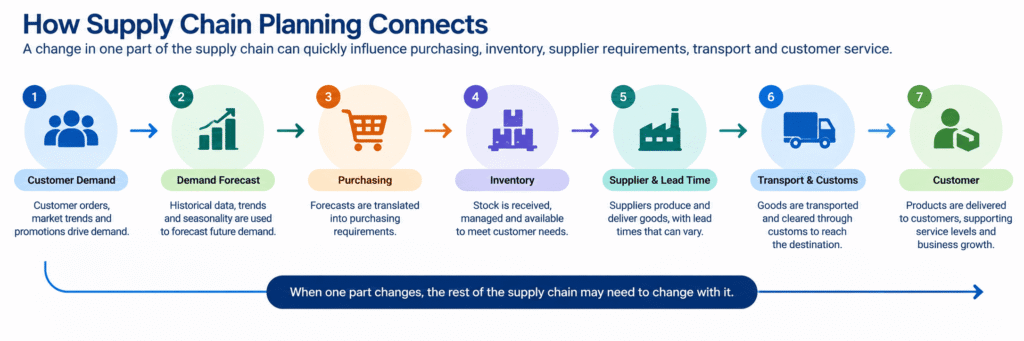
One Change Can Create a Chain Reaction
A 30% increase in customer demand can quickly create pressure across the supply chain if the change is not reflected in purchasing and inventory plans.
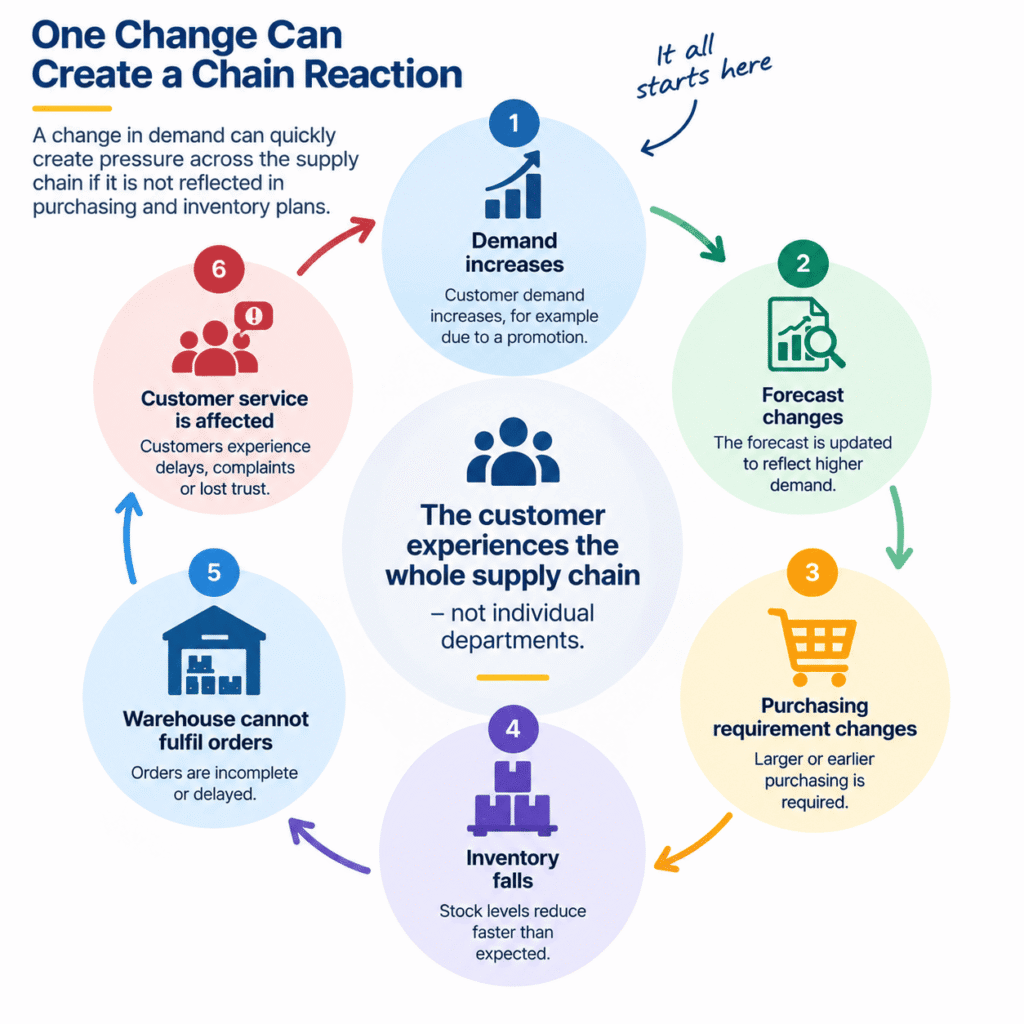
The Challenges of Supply Chain Planning
Supply chains rarely operate exactly as planned. Demand changes, supplier lead times move, transport is disrupted and inventory positions shift.
The challenge is not simply identifying these problems – it is understanding how a change in one part of the supply chain affects purchasing, inventory, customer service and cost across the wider business.

Demand Uncertainty
Difficulty predicting changing customer demand and understanding what it means for future purchasing and inventory requirements.

Supplier & Lead-Time Delays
Changes across supplier, transport and customs lead times can quickly affect replenishment, stock availability and customer commitments.

Stockouts & Excess Inventory
Too little stock can create shortages and lost sales, while too much stock ties up working capital and increases storage costs.

Reactive Decision-Making
Without a shared planning process, teams can end up making urgent decisions without understanding the wider impact on cost, cash, service and operations.
From Demand to Delivery - Understand the Complete Supply Chain
Understand Demand Analyse historical sales, trends, seasonality and demand variability to understand what customers are likely to need.
Manage Risk & Disruption Assess how supplier delays, transport disruption and demand changes affect cost, cash, service and inventory - and determine how the plan should change.
Plan Inventory & Purchasing Translate the forecast into purchasing decisions by considering current stock, safety stock, reorder points, MOQ and real supplier and transport lead times
Forecast Future Demand Use practical forecasting methods to develop a defensible view of future demand and understand forecast error and bias.
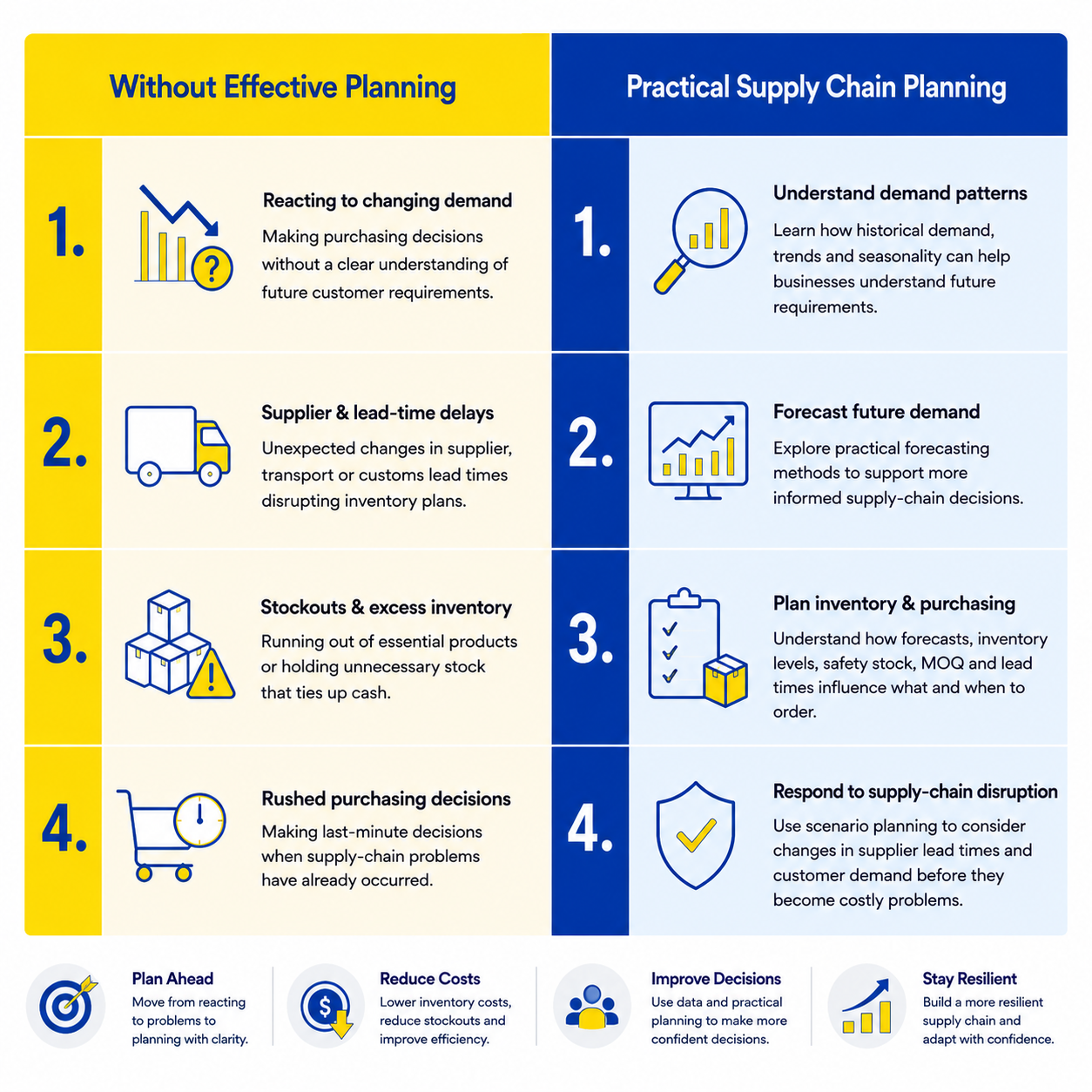
The Cost of Poor Supply Chain Planning
Without effective planning, businesses can quickly find themselves reacting to stock shortages, supplier delays and unexpected changes in demand. Decisions may need to be made quickly, often without a clear understanding of future requirements, available inventory or changing lead times. This course helps participants develop a more structured approach to supply-chain planning by connecting demand forecasting, purchasing, inventory and lead-time information to support more informed and confident decision-making.
From Forecast to Action
Step 1 - Understand Demand
Understand what customers are buying and identify the patterns that can influence future demand. Explore historical demand, trends, seasonality and demand variability to build a stronger foundation for planning.
Step 2 - Forecast Future Demand
Use practical forecasting methods to estimate future requirements. Learn how moving averages and basic forecasting techniques can support more informed supply-chain decisions.
Step 3 - Plan Inventory & Purchasing
Turn your forecast into practical action by considering current inventory, safety stock, Minimum Order Quantities (MOQ) and supplier and transport lead times.
When the Plan Changes
Because supply-chain planning does not stop once an order is placed.
Demand can change. Suppliers can experience delays. Transport can take longer than expected. A forecast that looked reasonable last month may need to be reviewed when new information becomes available.
Effective supply-chain planning means understanding how to respond when these changes occur.
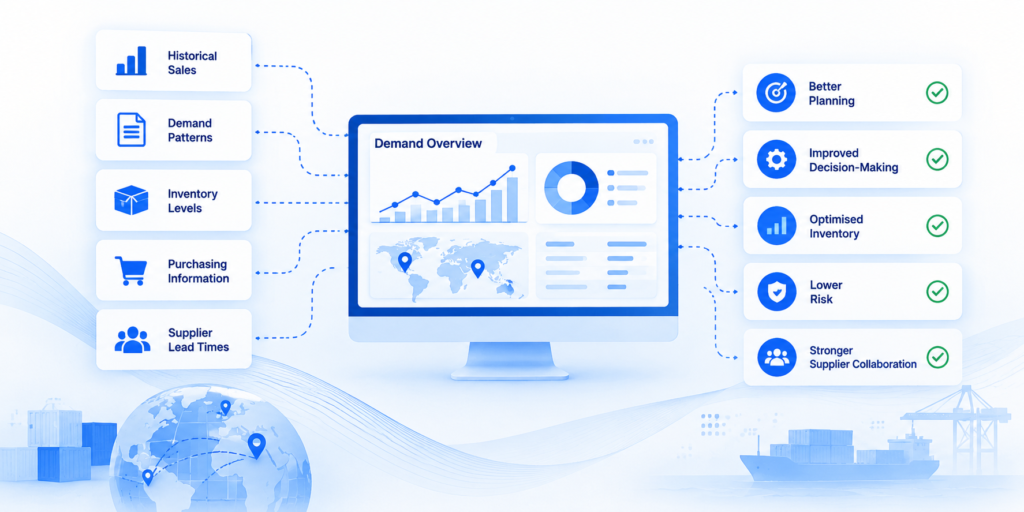
Demand Visibility
Gain a clearer understanding of the factors that influence your supply chain by bringing together historical sales, demand patterns, inventory levels, purchasing requirements and supplier lead times. Build a stronger view of your current supply position and future requirements, helping you plan ahead rather than react to supply-chain challenges as they arise.
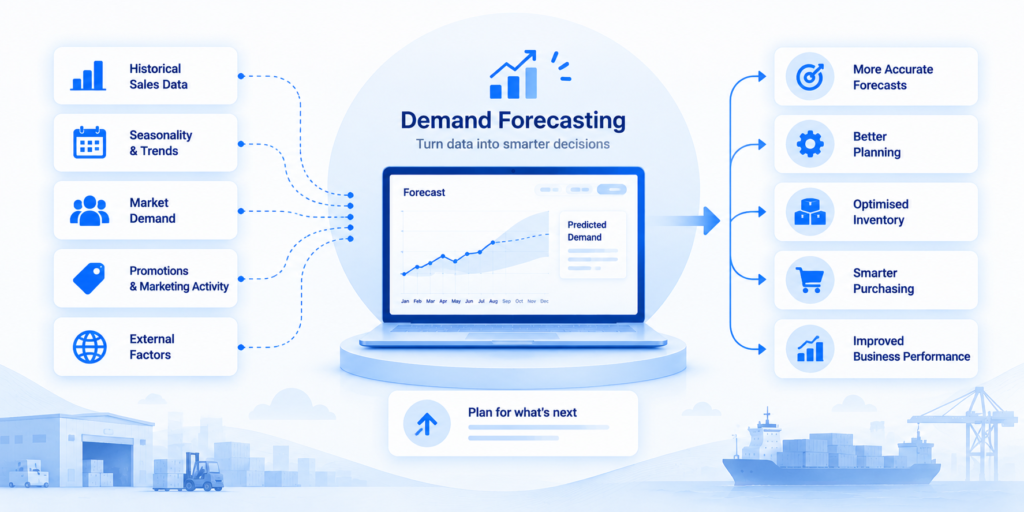
Demand Forecasting
Turn historical sales information into practical insights about future demand. Learn how to identify trends, seasonality and demand variability and apply practical forecasting methods to estimate future requirements, helping your business make more informed decisions about purchasing, inventory and supply planning.
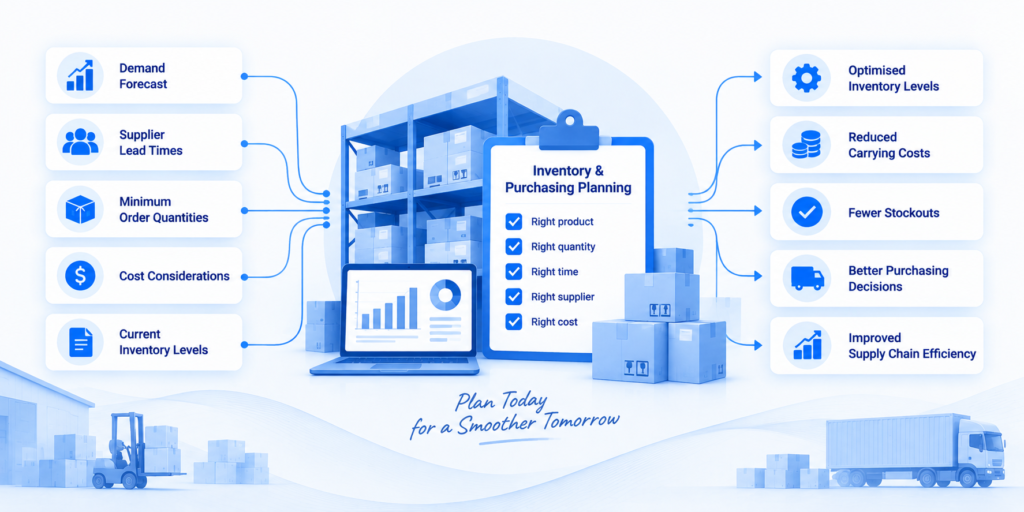
Inventory & Purchasing Planning
Connect demand forecasts with the information needed to make effective purchasing and inventory decisions. Consider current stock levels, safety stock, reorder requirements, Minimum Order Quantities and supplier lead times to determine when and how much to order, while balancing the risk of stockouts against the cost of holding excess inventory.
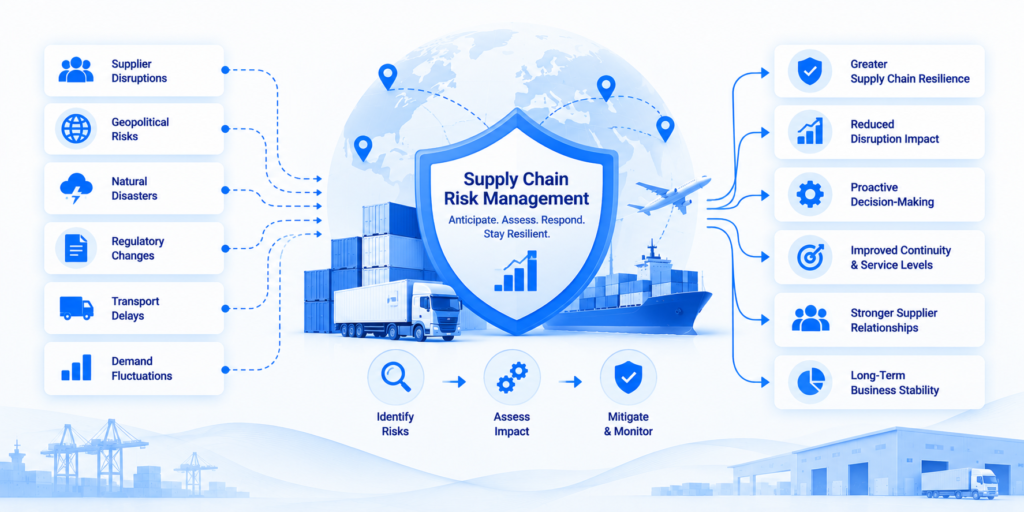
Supply Chain Risk Management
Prepare your business to respond when supply-chain conditions change. Understand how supplier delays, transport disruption, changing lead times and unexpected increases or decreases in demand can affect inventory and purchasing decisions, and use scenario planning to evaluate different outcomes and develop more informed responses.
FAQ
Who is this course suitable for?
This course is designed for importers, exporters, procurement and purchasing teams, supply-chain and logistics professionals, operations managers, inventory planners and business owners who want to strengthen their understanding of supply-chain planning and forecasting.
Do I need previous supply-chain experience?
No. The course is designed for Beginner to Intermediate level, making it suitable for participants who are new to supply-chain planning as well as professionals looking to strengthen their existing knowledge.
What will I learn on the course?
You will learn how demand forecasting, inventory planning, purchasing decisions, supplier lead times and supply-chain risk connect. The course also introduces practical forecasting methods, inventory concepts and the fundamentals of Sales & Operations Planning (S&OP).
Will the course include practical exercises?
Yes. The course includes a practical business exercise where participants use historical sales data to develop a forecast, assess inventory and determine purchasing requirements. The scenario then introduces supplier lead-time disruption and an increase in demand to demonstrate how planning decisions may need to change.
Will I learn how to forecast demand?
Yes. Participants will learn how historical sales data, demand patterns, trends, seasonality and demand variability can be used to support forecasting. Practical methods such as moving averages and basic exponential smoothing will also be introduced.
Will the course cover inventory management?
Yes. The course covers safety stock, reorder levels, Minimum Order Quantities (MOQ), cycle stock, stockouts, excess inventory, service levels, inventory turnover and ABC inventory classification.
Get a practical introduction to supply chain planning and forecasting and see how better demand visibility, inventory planning, purchasing decisions, and risk management can support your business.
In this practical half-day course, we’ll take you through real-world forecasting and inventory scenarios, helping you understand how to anticipate demand, plan stock requirements, respond to supplier delays, and make more informed decisions before supply-chain challenges impact your operations.